In this summary of Sherry Turkle’s reading, I’ll focus more on the ‘Robotic Revolution’ and how it pertains to the relationship she describes between humans and machines.
Beginning with the prologue, Turkle touches on the publication of The Second Self in the 1990’s. From this book, she explains the growing personal relationship of a computer/machine and a human.
She states,
“By then, the computer had become a portal that enabled people to lead parallel lives in virtual worlds…discovered a sense of place.”
In having this development in the relationship between humans and computers, Turkle further states that as a result of this there has been a change in the boundaries built between the real world/real life, and the virtual world.
To further express this development, Turkle gives us the example of a college student named Doug who is active within many virtual worlds and balances the virtual along with real life. In this he says that real life
“is just one more window…it’s not usually my best one.”
It is in the emergence of a growing “networked life”, where popular search engines in today’s society appear as well (Google, Internet Explorer). Networked life changed drastically when the Internet went mobile, where “the network was with us, on us, all the time.”
With this new life the opportunity arises where people can “hide from each other”.

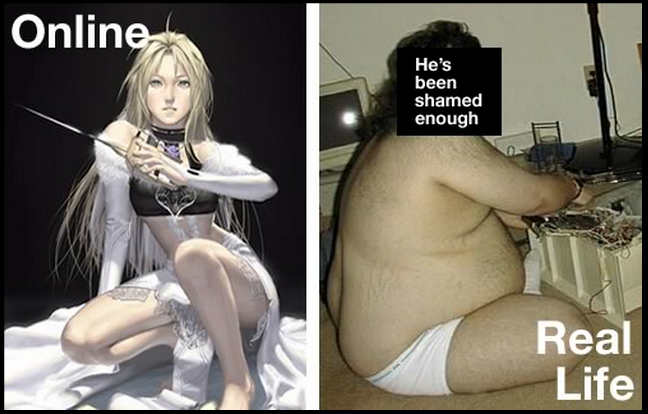
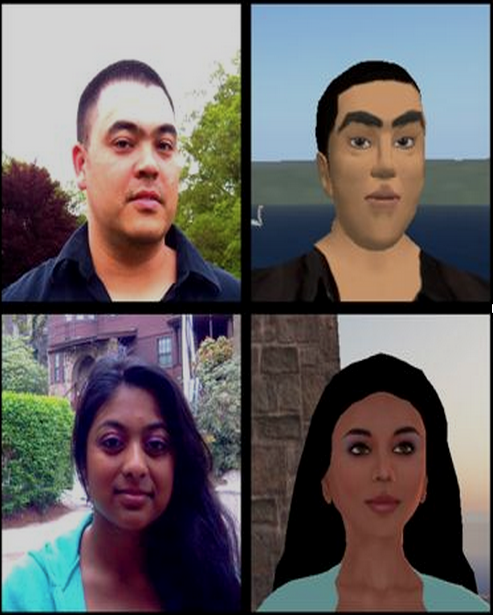
In the creation of these worlds the author states that certain individuals start to become captivated with these worlds, and thus begin to trade “RL” (real life) for the virtual. Chat rooms and online gaming become more popular resulting in people abandoning their true self for a persona or avatar, in which they can start a new life and become “a lot younger, thinner” version of themselves. This allows people to hide even deeper from the real world and each other with this new identity/avatar.

Sherry Turkle also describes this “second life” to grant the user a “place for hope in life”, and an end to loneliness cured by the presence of people online.
Turkle includes this quote from an old woman about her I-phone,
“It’s like having a little Times Square in my pocketbook. All lights. All the people I could meet.”
She also gives the statement about the internet being “seductive” and to the average person presents a chance to escape the real world.
Turkle delves deeper into the discussion of the relationship between humans and machines with, robots. Whether it be love, companionship or loneliness, Turkle explains that individuals look for a variety of needs from robots that they cannot achieve in real life.
Companionship is what Turkle states throughout the reading as to why robots are often sought after, and in some ways can be considered controversial.
The element of insecurity, lack of trust, and fear of disappointment in relationships are common factors that add onto the growing interaction with robots. As a result, there is the emergence of “sociable” humanoid robots such as the ELIZA program in the 1970’s. Popular examples of sociable robots include the popular Tamagotchi, and Furbie toys for children. From these creations came the idea of us giving,
“human qualities to objects and content to treat each other as things”.
“No cheating. No heartbreak.”
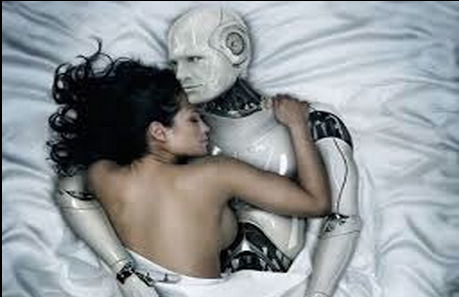
A romantic relationship with a robot is explored in the reading, and advocated strongly by David Levy. He argues that in time robots will teach humans to become better lovers, friends, and companions. Levy even goes as far as saying that robots will replace humans.

“Beyond this, they will substitute where people fail.”
Turkle explores the possibility of this relationship and is surprised at the results of her findings. The popular reasoning behind these relationships or “technological promiscuity” that Sherry Turkle finds, are that robots do not come with the taxing demands, and disappointments, that humans bring.
“After all, we never know how another person really feels. People put on a good face. Robots would be safer….I’d rather talk to a robot. Friends can be exhausting. The robot will always be there for me.”
Overtime the possibility of actual relationships between humans and robots has grown, and so has the recurring belief that when,
“other things go wrong, science will go right.”
Hope has been put into machines, and as a result they have become “a twenty first century deus ex machina”…
Bringing in points from other readings, like the reading Zack discussed on the Critical Engineering Manifesto, we discussed possibilities of future technology that we’d want to see in the future of our society. For the most part the conclusion of our discussion leaned more toward being opposed to new forms of technology like robotic ‘companions’, and even sci-fi related technology like talking toilets and wristbands that read our calories and go as far as determining what kind of insurance we’re able to have.
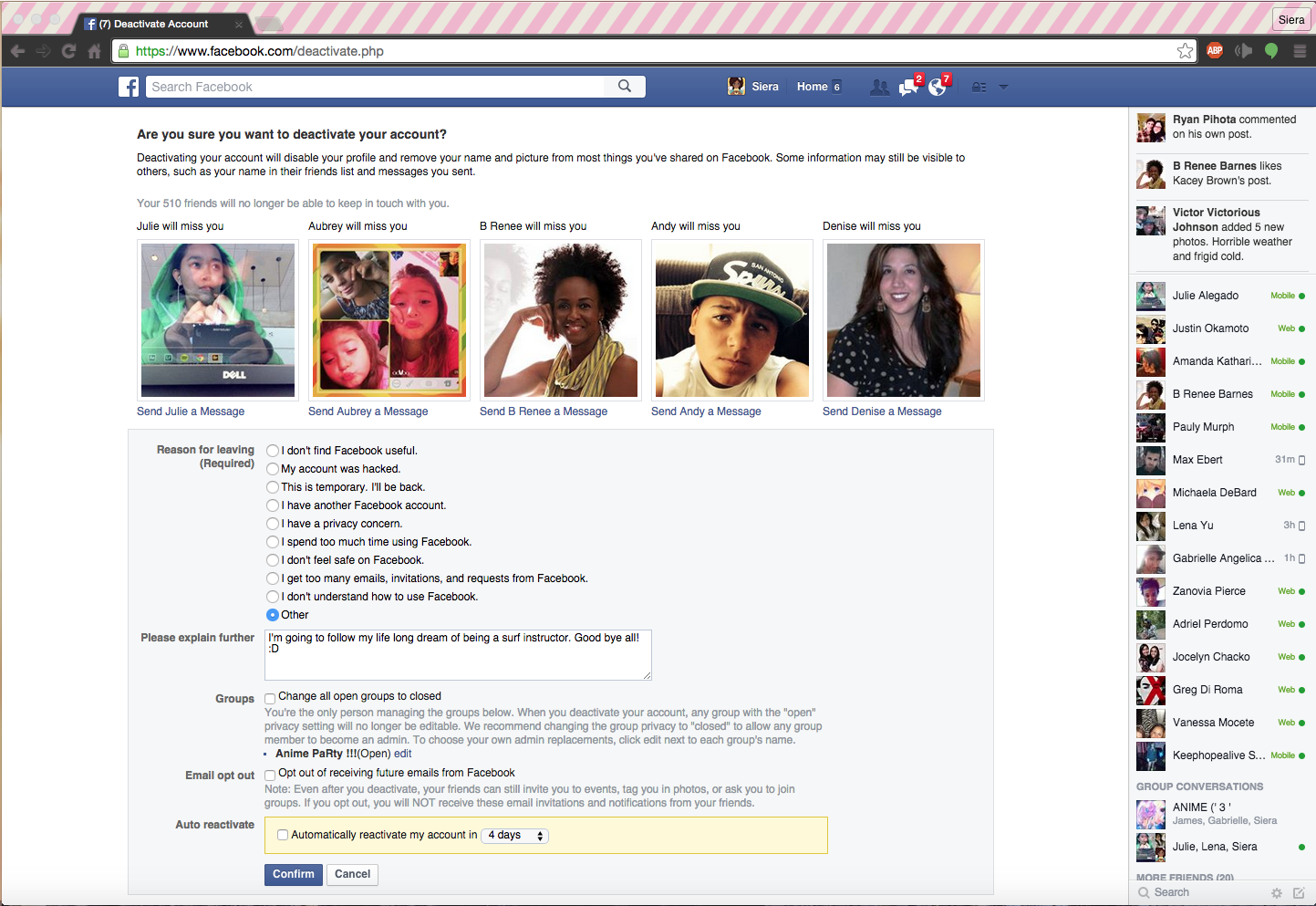
Having technology become too involved in our lives to the point where they’re able to recognize and dictate how we live is what we are the most opposed to when it comes to new technology. Even though the technology that we have in social media is closer now than its ever been to this theory. Platforms like Instagram and Facebook allow individuals to post and share every aspect of our lives in various forms like pictures, and has become a daily routine for most people who have become attached to these ‘social machines’.
In the first reading we discussed how social technology could bring us closer together and allow us to share information across large spectrums in cyberspace. Following this theory we had a similar discussion regarding whether or not this technology will benefit or corrupt future generations. The conclusion came out positive, in that technology can better the future of our society and allow us to excel whether it be in education or in the social spectrum.
Discussion Questions
1) Would you rather live in a world occupied by machines (lets try not to think of the Terminator here)?
2) Does an individuals social status affect their online persona?
3) Do you think our society would be better or worse without the presence of media and technology (such as Facebook, computers, Tv’s)?
4) Honestly speaking, would you prefer a mechanical companion or a real spouse? What are the pros and cons? Why do you think some people might choose the machine over flesh and blood?
5) Which do you prefer? Talking or texting? Do you think this preference conveys the decline or increase in social interaction within our society?
Here is a link to an example of a video project I made addressing these questions and more in the realm of cartoons and video games. (http://vimeo.com/93404898)