Posts Tagged ‘#week11’

Java

Attempting at Javascript coding:

I’ve had a lot of confusion about text input and output programs like node, gibhub, terminal, where/when to use them// I am not sure if all the library computers have them.

Once I started using sublime 2, Everything became more visual and easy to understand…  w3schools.com was a big safety net in my testing and trying to come up with something/anything interesting to begin development for my final assignment.

“Word Vomit” is essentially an html Document that uses Javascript in sublime 2.  I compiled the past 50-70 tweets i’ve made into a code and made a “disposal” <button> that will (onclick) remove the first Tweet from the list (array)… Heres a better explanation from w3 schools itself..
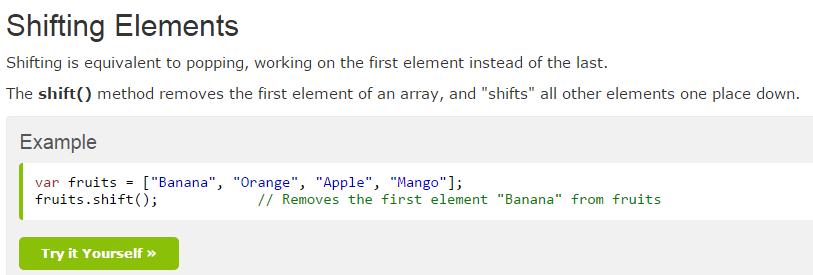
shift

The explanation behind Word Vomit is that I am an excessive, sometimes emotional tweeter… when all these lines of the “Array” are shown on the social media feed, they are (somewhat) accepted.

“oh she tweets too much” “she tweets like every 5 seconds”

This method of coding accepts zero means of formatting or twitpics and just displays the constant updates of ones Twitter that could be either a quote I heard, lyrics to a song, a lethargic thought, a drunk thought, or even just a word I decided deserved a hashtag.

words turn into madness when they aren’t so organized on a media outlet. It kind of reminds me of a poorly coded myspace.

This is a concept I plan to continue to study in Assignment 3…

Anyway, in order to stop the madness, the viewer can click “dispose” until the page is empty — It erases each Tweet starting from the first line , making it easier to the eyes for the viewer to read each tweet prior to disposing it if they wish —  If they are just disgusted with the amount of tweets I’ve sent, dispose away…

You’ll know its almost over when you reach the final tweet (my new twitter handle ) “@javasmitten”

word vomit: http://students.purchase.edu/ERICA.VITUCCI/java.html

code:  wordvomit  >> I put in sublime 2

“Her” – Overview

Since growing up into a culture of action-suspenseful sci-fi films, the typical theme on how the human race is placed in the middle of a movement where robots or artificial intelligences would become a part of our lives. The traditional mindset of robots either being our slaves to satisfy our wants and needs or where a company or secret organization developed a machine that goes into a man-killing rampage. However, when the technology world goes beyond the barrier of reality and fantasy, programmers to engineers produced modern-day devices that resembled themselves as robots or artificial intelligences.

After watching the movie, “Her” by Spike Jonze, as the audience, the plot of this modern day sci-fi was focusing on a sensitive and soulful writer, named Theodore, who later on built an “interesting” relationship with an operating system named Samantha. Like today’s sci-fi films, there wasn’t the cliché-terminating robot or a community of robots rebelling against the human race, but these OS’s preferred to live one with humans as whole. However, this trend of robots and humans becoming friends, or in this film’s case, lovers, the bond between humans and artificial intelligences isn’t well developed to maintain a bond over friendship or love. Unlike typical romantic or good-buddy films, these two worlds do collide, but ended before the story is finished. In other words, Theodore and Samantha ended up separating from each other because their worlds are completely different and their bond isn’t practical for a “healthy” relationship. Despite the bittersweet relationship between Theodore and Samantha, their unique bond was close being to be forbidden or abnormal.

Theodore waiting for OS to work

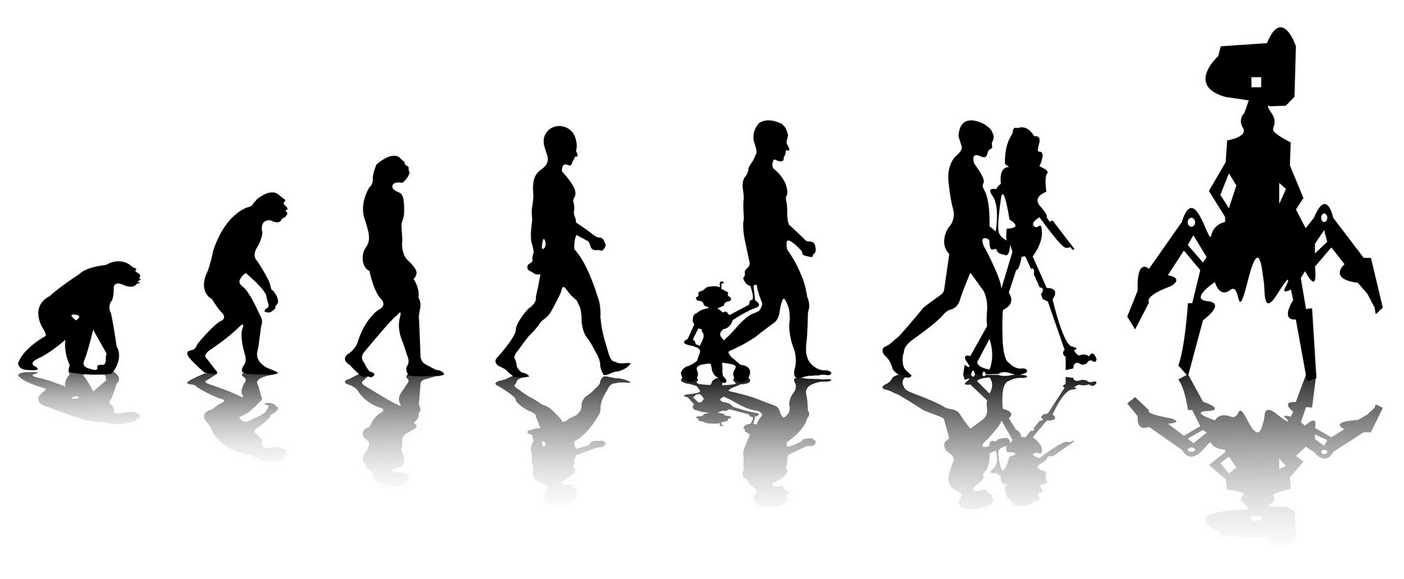
When Samantha and the other operating systems decided to leave, the movement had established this sense of evolution on how both humans and artificial intelligence developed dependence and independence among each other. Furthermore, these aspects would question on how well and strong does the human race trust and relate to robots or artificial intelligence. Darwin’s Theory of Evolution came to mind to illustrate if one-day bionics would walk among humans and it’s decedents.

Expanding on Darwin’s Theory of Evolution

From a segment of a Radio Lab podcast, the episode focused on interaction and relationship on individuals or communities that grew fond with robots and computers. In other words, these various individual tend to later on describe these technological devices to be more humans than machines. For instance, the Radio Lab crew interviewed a man named, Robert Epstein, who didn’t realize he’d fallen in love with a virtual booth while dating it online. A contrast to how Theodore viewed Samantha. When Theodore first met his new operating system, he knew Samantha was just an artificial intelligence, but, he didn’t know how advance Samantha was to be capable of “adapting” to the human lifestyle where she slowly reprogrammed herself to become more human.

Citation:

“Talking to Machines.” Radio Labs. WNYC Radio, 31 May 2011. Web. 16 Apr. 2015.

HER. Dir. Spike Jonze. Perf. Joaquin Phoenix, Scarlett Johansson. Warner Bros. Pictures, 2014. DVD.